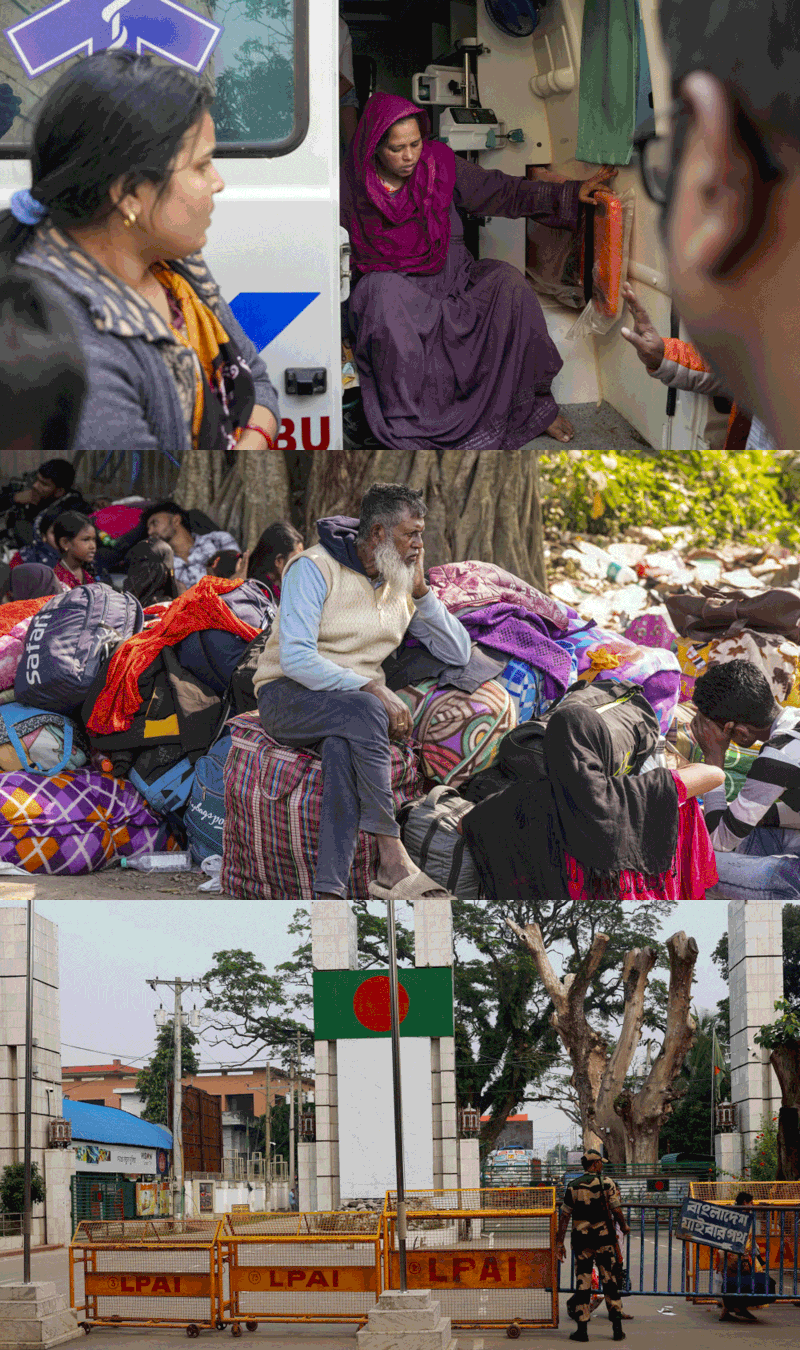
Supreme Court is currently hearing a petition that seeks that those who have applied for citizenship under the controversial CAA, many of them from Assam, should be given voting rights even as their applications are processed. This is very typically an Indian approach to those who have sought refuge. Let the wait for paperwork not hinder political rights. In this case, petitioners argue that receipts for CAA applications should be considered provisional citizenship document. That is the nature of citizenship in India. From 2013 to 2019, when SC judges Ranjan Gogoi and Rohinton Nariman monitored the National Register of Citizens in Assam (2013 to 2019), millions had few documents – kagaz hai nahi, kya dikhaye. “Have no documents to show.” Ahead of CAA 2019, protests raged against religion as basis for citizenship: kagaz nahi dikhaenge. “Won’t show documents.” Documentation is just one part of proof of Indian citizenship.The quandary of Bengali Muslims today, rounded up and detained throughout this year in Haryana, Gujarat, Maharashtra, Delhi, Rajasthan and Odisha is kagaz kisi kaam ke nahin. “Documents are no protection.” A case of a Bengali Muslim contractor in Bombay HC aside, who even has a passport, the hundreds detained are largely labourers, waste collectors and ragpickers – recall the garbage pile-up in Gurgaon. Sunali is one of those ragpickers picked up by Delhi Police. Around 1,200 were “pushed” into Bangladesh in May alone. To understand why Bengali Muslim migrants are in the state’s crosshairs, pitstops are needed in Assam and Bengal.