Why Pakistan’s love for chai and sugar is bleeding its economy dry
- Ali Tauqeer Sheikh
- Jan 01, 2026, 20:34 IST IST
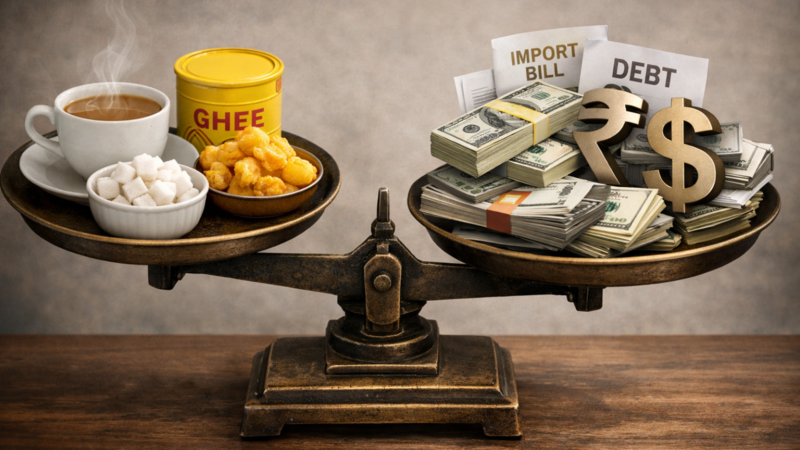
THIS new year, I’ve made a simple promise to myself — to cut back on chai, cheeni and ghee. It is not just about my own health — though my waistline surely needs it. It is a stand against habits that are quietly bleeding Pakistan dry. Sweet milky tea, sugary sweets and ghee-drenched parathas are everyday comforts that cost us over $4 billion for edible oils, $600 million for tea, and significant subsidies and spikes for sugar. They fuel our shocking 31.4 per cent diabetes rate, the highest in the world. And as climate-triggered disasters ravage us again, we see their hidden climate toll. What was once warmth and hospitality has become a national vulnerability. It is time to face facts and find fixes.
Our consumption pattern: Pakistanis drink a lot of tea. At 1.5 kilogram per person annually, we rank sixth globally — more than twice India’s rate. That is four to five cups daily in most homes, loaded with sugar and milk. We consume over 25kg of sugar per head yearly, much of it in chai and mithai. Additionally, a major share comes from juices, sodas, confectionaries and bakery products. Over the last decade, this has caused our import bill to explode. Total edible oil imports exceeded $4bn in 2024, with those high in saturated fat alone accounting for nearly $3bn. To grasp the scale: this exceeds Rs1,100bn that is nine times Pakistan’s combined federal budgets for education and health, and over 100 times what the treasury received from the PIA privatisation.
Our consumption pattern: Pakistanis drink a lot of tea. At 1.5 kilogram per person annually, we rank sixth globally — more than twice India’s rate. That is four to five cups daily in most homes, loaded with sugar and milk. We consume over 25kg of sugar per head yearly, much of it in chai and mithai. Additionally, a major share comes from juices, sodas, confectionaries and bakery products. Over the last decade, this has caused our import bill to explode. Total edible oil imports exceeded $4bn in 2024, with those high in saturated fat alone accounting for nearly $3bn. To grasp the scale: this exceeds Rs1,100bn that is nine times Pakistan’s combined federal budgets for education and health, and over 100 times what the treasury received from the PIA privatisation.