
The silence of Valluvar’s wife
The Thirukkural has no mention of Valluvar’s wife; but later texts and oral traditions speak of a certain Vasuki as the poet-saint’s spouse, who is lauded as an epitome of obedience and devotion to her husband. But what was Vasuki like in real life and what did she think of it all? Listen to this week’s episode.
Feb 14, 2026, 6:00 IST
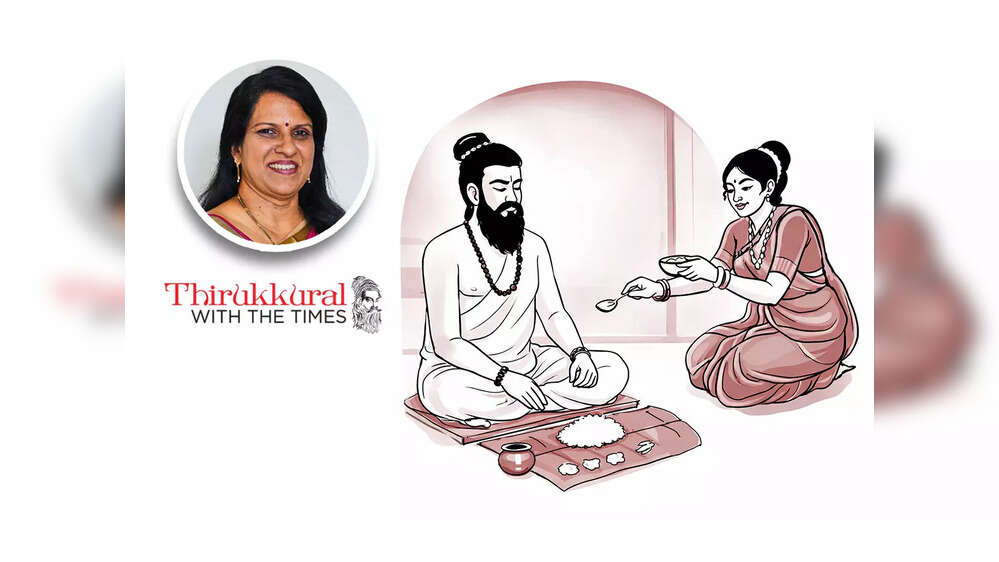
Thirukkural with the Times explores real-world lessons from the classic Tamil text ‘Thirukkural’. Written by Tamil poet and philosopher Thiruvalluvar, the Kural consists of 1,330 short couplets of seven words each. This text is divided into three books with teachings on virtue, wealth, and love and is considered one of the great works ever on ethics and morality. The Kural has influenced scholars and leaders across social, political, and philosophical spheres.Motivational speaker, author and diversity champion Bharathi Bhaskar explores the masterpiece.Vasuki, remembered as the wife of Thiruvalluvar, occupies a peculiar space in Tamil cultural memory. She is celebrated, quoted, and held up as an ideal of devotion. Yet the ground beneath her story is thin. That is perhaps what makes her story both compelling and uneasy.The Thirukkural says nothing about Valluvar’s personal life – a wife, a household, or family ties. Into this silence, later generations appear to have placed Vasuki — not merely as a companion, but as a perfect embodiment of obedience and virtue. Medieval and post-medieval commentaries, regional biographies and oral traditions and folk narratives do mention Valluvar’s wife Vasuki.According to later accounts, Vasuki was also known as Nagi, and was the daughter of Margaseyan, a farmer near Kaviripakkam, and his wife Ambujam. It is said that Margaseyan offered his daughter in marriage to Valluvar after the poet cured his diseased crops. Asked to cook a handful of sand, Vasuki is said to have turned it into rice.Stories about Vasuki are multifarious, but in all of them she is gentle, devoted, self-effacing. Legends say Valluvar and Vasuki had no children, though this is never stated directly. At the same time, one cannot help but notice that Valluvar writes movingly about the joy of children — even stating that the flute and the lute are not as sweet as the babble of one’s own child.In one well-known story, Valluvar asks Vasuki to place a toothpick and a bowl of water beside his plate each day. He never used either. Vasuki continued the practice without question. Only on her deathbed, it is said, did he explain that the toothpick and water were meant to save a fallen grain of rice, should it slip while she served. She had never given him the chance to use them. Relieved, Vasuki is said to have passed away peacefully.Perhaps these stories grew from Valluvar’s own concept of an ideal wife. The chapter titled ‘Vaazhkkai ThunaiNalam’ describes a perfect wife – one who worships her husband and sticks to societal norms. In Kural 58, he writes:Petraar Perinperuvar Pendir PerumsirappuPuthelir Vaazhum Ulagu.Women of noble virtue bring great honour to those who cherish them; they create a world where divine grace resides. Later retellings stretch this idea, turning virtue into silence and devotion into erasure.Another familiar episode sharpens this imbalance. When Valluvar calls out to Vasuki while she is drawing water from a well, she rushes to him, leaving the pail hanging mid-air; it remains suspended until she returns. The image is lyrical, almost divine. But beneath it lies an assumption made sacred: that a wife’s instant response is not just expected, but exalted.It is important to note that none of these demands are recorded as Valluvar’s own instructions. Over time, society seems to have placed its expectations upon his moral authority, turning ethical ideals into domestic rules.The stories rarely pause to ask a question. What did Vasuki want? Did she ever speak of her own hopes? Was her silence chosen — or assigned? The traditions do not tell us, perhaps because they were never meant to.Perhaps Vasuki deserves to be remembered, not as a flawless symbol, but as a mirror — reflecting how devotion is praised, how silence is sanctified, and how easily imagery can slip into erasure when stories are told without asking who is allowed to speak.
Explore Every Corner
Across The Globe
NZ vs SALeon DraisaitlChris BassittIND vs PAKIndigo Pilot HiringIND vs PAK T20 World CupEdmonton OilersTravis Kelce MotherJosh Morrissey InjuryMyles GarrettWinter Olympics 2026Slovakia Olympic HockeyArizona State UniversityJannik SinnerDarron Lee GirlfriendAuston MatthewsHenrik LundqvistChris Paul RetirementKyle Busch and Samantha Busch Net WorthKayla NicoleNBA All Star Weekend 2026Cardi BBrad MarchandConnor McDavid WifeKendall JennerLawrence BishnoiH 1B Visa RestrictionsHenrik LundqvistIND vs PAK Head to HeadT20 World Cup 2026 Schedule
Hot on the Web
Maha Shivratri WishesAnurag KashyapVijay DeverakondaValentine's Day QuotesSalman KhanRajpal YadavShraddhaDhanushBaby NamesValentine Day Gift IdeasGeorge ClooneyInderjeet Singh'O'Romeo' Box Office CollectionSnakes Hiding SpotsSmriti MandhanaGauri KhanPriyanka ChopraKrushna AbhishekPandit Ravi ShankarDrishyam 31987 Dinner MenuMardaani 3 Box Office CollectionSufi Heritage Festival 2026Hair Care TipsBorder 2 CollectionRobert FrostBorder 2 Movie ReviewZodiac SignsFarhan AkhtarTu Yaa Main Movie ReviewToday Gold Rate in ChennaiDelhi Weather TodayDelhi AQI TodayMumbai AQI TodayMaharashtra Public Holidays 2026JPMorganQuote Of The Day By Marie CurieElon MuskSridhar VembuJensen HuangAnthropic Ceo
Trending Topics
Tom BradyNew Zealand vs South Africa Live ScoreUSA vs Netherlands ScorecardTeam USA HockeyKhamzat ChimaevErika KirkUSA vs Netherlands HighlightsBFUHS Staff Nurse Recruitment 2026Suryakumar YadavTravis HeadDrake MayeBangladesh Election ResultsAbhishek SharmaSohaib KhanAuston MatthewsTarique RahmanCardi BNikhil GuptaGurpatwant Singh PannunSheikh HasinaT20 World CupIndia vs PakistanPOSH Act ImplementationBad BunnyGabriella CarvalhoJannik SinnerOmar AbdullahSheikh HasinaTaylor SwiftStefon DiggsChhattisgarh HCKerala womanNoida techieMahbubnagar municipal corporation resultsMaharashtra pharmacy distributorKarnataka school headmasterGujarat murderDelhi UniversityCM Himanta Biswa SarmaHow to watch ICC T20 World Cup 2026 in USAHow to watch ICC T20 World Cup 2026 in CanadaHow to watch T20 World Cup online in India
Popular Categories
HeadlinesSports NewsBusiness NewsIndia NewsWorld NewsBollywood NewsHealth+ TipsIndian TV ShowsTechnologyTravelEtimesHealth & FitnessHow to watch T20 World Cup OnlineIndia vs Pakistan MatchAstrologyAutoWeather TodayGold Rate Today DelhiSilver Rate TodayPlatinum Rate TodayIs Bank open todayBank Holidays in February 2026Public Holidays in February 2026DeorhiTechnology NewsInternational SportsPublic HolidaysBank HolidaysT20 World Cup Squad IndiaT20 Wprld Cup Squad
Trending Videos
‘Fight Isn’t Over’: Denmark EXPLODES Over Trump’s Greenland Threat | ‘He’s Still Very Serious’Abhishek Sharma is back and India to unravel a mystery slinger‘FLOCK OF SHEEP!’: Pro-Russia EU Ally Drops Bombshell, ‘Europe SLEEPWALKS With No Real Leader’Kerala CM Pinarayi Vijayan Inaugurates Silver Jubilee Complex of EMS Memorial Hospital in PerinthalmannaAmit Shah Slams Rahul Gandhi Over FTAs, Backs Modi Govt’s Trade DealsMetro Pillar Collapse In Mulund Leaves One Dead, Three InjuredSinger Mika Singh offers prayers at Shree Jagannath Temple in PuriPulwama Heroes Remembered: CRPF’s 137th Battalion Pays Tribute in UdhampurP Goyal Rejects Rahul On US Deal, PM's Big Push For Assam Projects, Brahmaputra Link And More‘HELLISH TERROR!’: Russia Unleashes FIRESTORM, Rips West’s ‘Billions For Ukraine’ Agenda At MunichAnti-Iran Tsunami SHAKES Munich; 200,000 Protesters Rally To Topple Khamenei After Deadly UnrestNancy Guthrie’s Final Nextdoor Post Resurfaces as Cameras Become Key Evidence In ProbeIndia XI: Abhishek Sharma in, who goes out and what about Kuldeep Yadav?Allahabad Budget Push, Urination Killing Case, Solar Plan, Rs Three Hundred Killing, HC Rap‘Got Assurance From India...’ Marco Rubio On Russian Oil After Trade DealNigerian Rock Star Spreads Love on the Streets: Clayrocksu Redefines Valentine’s Day Bella Ramsey Breaks Down Her Emotional Acting TechniqueRose Byrne Crowned Hasty Pudding Woman of the Year By Harvard
Latest News
Volcano that killed thousands shows frightening new activity undergroundHow old is Jimmie Johnson? Seven time NASCAR champion enters retirement era with part time racing and team ownershipLibra Horoscope Today, February 15, 2026: Financial gains from hidden or unknown sources are possible“Stefon is a cheater that gets other women pregnant”: Fans blast Cardi B for choosing Stefon Diggs over Offset amid breakup rumors2 journalist bodies condemn Rahul Gandhi talk on media impartialityEC asks West Bengal govt to comply with its directives by February 17Fact check: Did Marc Kennedy cheat at Winter Olympics as Oskar Eriksson questions Canada win over Sweden in curling?Valter Walker defeats Zion Clark by rear naked choke in controversial Karate Combat fight in MiamiGovt cheating cotton farmers, textile exporters in US trade deal, says Rahul GandhiSikh student assaulted after being mistaken for ‘Hindu’ at San Jose State University, Hindu groups condemn attackHaryana CM Saini: Change of land use certs to go online for 10 industrial hubsBuilding in India, exporting to world, assert business honchosTeam USA luger Sophia Kirkby meets fan in Italy on Valentine’s Day after surprising DM during Winter Olympics stayVirgo Horoscope Today, February 15, 2026: Today is lucky for speculation or gamblingTravis Kelce despised Taylor Swift’s friends as mounting tensions forced wedding plans to haltMarc Kennedy fires back after Olympic curling controversy as Canadian star warns rivals following heated clashChibi Reviews fires back at critics as YouTuber Jacob Seibers says backlash only made him grow onlineLeo Horoscope Today, February 15, 2026: Jupiter brings a little extra luck
Copyright © 2026 Bennett, Coleman & Co. Ltd. All rights reserved. For reprint rights: Times Syndication Service