
A stuffed orangutan and shared grief
To be denied belonging by one’s own group causes the deepest among human wounds. And that’s why millions felt an ache on seeing an infant macaque deprived of its mother’s warmth. Certain emotions remain the same through millennia, proves a couplet by Valluvar. Listen to this week’s episode to learn more.
Feb 28, 2026, 6:00 IST
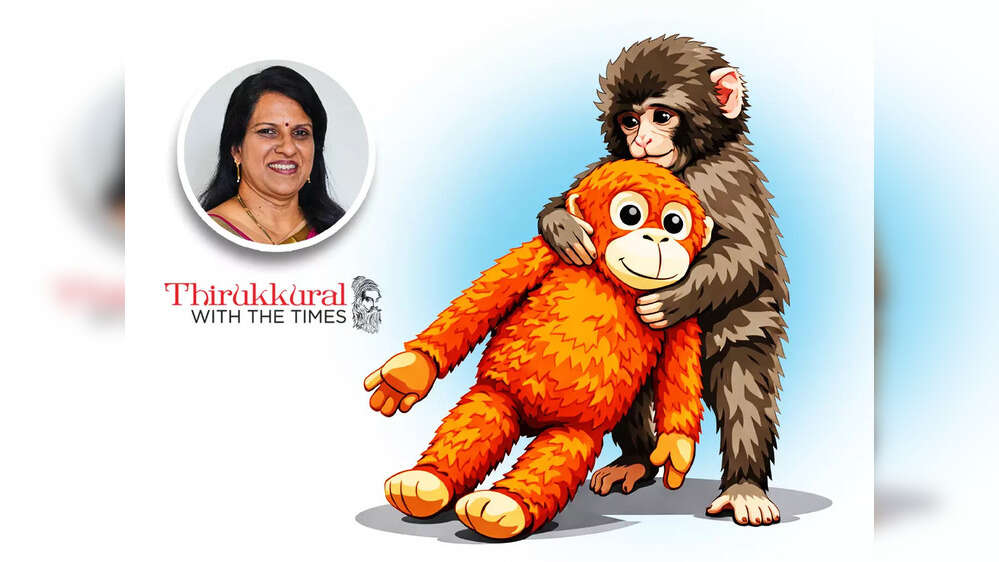
Thirukkural with the Times explores real-world lessons from the classic Tamil text ‘Thirukkural’. Written by Tamil poet and philosopher Thiruvalluvar, the Kural consists of 1,330 short couplets of seven words each. This text is divided into three books with teachings on virtue, wealth, and love and is considered one of the great works ever on ethics and morality. The Kural has influenced scholars and leaders across social, political, and philosophical spheres.Motivational speaker, author and diversity champion Bharathi Bhaskar explores the masterpiece.Recently, the internet found a new child to weep for — a seven-month-old baby macaque named Punch, who lives in the Ichikawa city zoo in Japan. Abandoned by his parents at birth and rejected by his clan, zookeepers gave him a stuffed orangutan toy for comfort. Punch clutched it instantly and carried it everywhere, running to it whenever threatened.Not long ago, a similar wave of emotion spread across the world for another solitary animal — the penguin that wandered away. Now it is Punch’s turn. Visitors flock to see him; strangers from abroad send identical plush toys in case his toy wears out.But the tears shed for him go beyond a love for animals. People see themselves in the tiny creature, their own histories of rejection, humiliation, subtle bullying by dominant members, exclusion for being different in appearance, caste, creed, accent or gender. The new employee who eats lunch alone after others leave, for example, the daughter-in-law entering an established household, the migrant, the misfit, the outsider who hears, in countless small ways, “you don’t belong here”.I remember such an exile of my own. When I changed schools in Class IX, I left behind the comfort of familiar friends. The new class felt closed against me. Mornings were heavy with dread. It took an academic breakthrough — outdoing established toppers in the first examination — to gain acceptance. Friendships eventually formed; warmth returned. Yet, decades later, the chill remains vivid. Watching Punch flee to his toy, I recognise that search for something that will not reject us when the social world turns cold.Vaishnavite tradition offers a telling metaphor: markata nyayam and marjala nyayam. The baby monkey clings to its mother; the kitten is carried by the mother cat. The devotee may hold to the divine, or the divine may hold the devotee. Punch lost, or was denied, that primal grip. His plushie became the body he could hold.Zoo authorities call the clan’s behaviour normal. In primate hierarchies, difference is rarely tolerated at first. They expect that, in time, Punch will learn to cope and find his place. Perhaps one day he will no longer need the toy. We have seen that moment in our own homes: the doll we once clutched in sleep, the blanket dragged everywhere. Then, quietly, we stopped asking for it. The toy remains in a cupboard, then a box, then — during house cleaning — is given away. Parents pause, holding it, feeling the ache of abandonment which comes with growth.So too with Punch. There will likely come a day when the orange companion is no longer his world. But today, it is his lifeline. And in that image lies something universal: every life form needs something — or someone — to cling to. Attachment is not weakness; it is the root of survival. Whether it is a mother’s body, a friend’s presence, a belief, a memory, or even a toy, love is the sustaining grip that keeps existence from falling into emptiness. Thiruvalluvar saw this with piercing clarity. In Kural 78, he wrote: Anbagathu Illaa Uyirvaazhkkai Vanpaarkkan Vatral Maramthalirth ThatruA life without love to hold it, is like a withered tree struggling in wilderness To sprout in arid groundPunch clings to an orange toy. We cling to less visible forms of love. The gesture is the same — and it is what keeps us all alive.
Explore Every Corner
Across The Globe
Matthew TkachukDelhi Excise Policy CaseDon SweeneyAntoine Dupont Net WorthUEFA Champions LeagueWilliam NylanderOlympic medalist Chloe KimStellaron Hunter Blade FortniteDylan LarkinT20 World Cup Points TableToronto Maple LeafsNFL Trade NewsStephen CurryJohn CenaKai TrumpNFL Trade NewsResident Evil RequiemLauren KyleNFL RumorsFIFA World CupUS Attack on IranJaQuan McMillanMohammed Bin SalmanMyles GarrettShai Gilgeous AlexanderCleveland Cavaliers vs Detroit PistonsKielyn McCrightAlex LyonT20 World CupT20 World Cup 2026 Schedule
Hot on the Web
The Kerala Story 2R MadhavanThaai KizhaviVivek OberoiKeanu Reeves QuoteRashmika MandannaAjith Kumar HouseChiranjeeviRashmika Mandanna Sangeet CeremonyJana NayaganVijay Deverakonda Wedding AlbumAnkita LokhandeYami GautamSindhutai SapkalSai Pallavi HouseSunil Bharti MittalKamal BungalowHair Growth OilsNamo Bharat Rrts Corridor'O'Romeo' Box Office CollectionMumbai AirportRashmika- Vijay Wedding PicturesLunar Eclipse City Wise TimingsFlorida ParkKuno National ParkHoroscope TodayThe 50The Bluff Movie ReviewBorder 2 Movie ReviewTu Yaa Main Movie ReviewToday Gold Rate in ChennaiDelhi Weather TodayDelhi AQI TodayMumbai AQI TodayMaharashtra Public Holidays 2026Anthropic Ceo Dario AmodeiVivo V70Suryakumar Yadav Luxury ApartmentWarner BrosQuote Of The Day By Louis PasteurNarayana Murthy AI Warning
Trending Topics
Luke HumphriesDrake MayeAiden MarkramGavin TuckerAustin ReavesResident Evil RequiemThe Kerala Story 2Drew McIntyreArvind KejriwalTony DungyToronto Maple LeafsDaniel ZellhuberBig 12 Mens Basketball TournamentDylan LarkinIGNOUFrancisco CerundoloHarrison SmithBrady TkachukRobert VadraMark CarneyPOCSO CaseSSC CHSL Result 2026Bill ArmstrongSourav GangulyUS Stocks TodayLewis HamiltonOlympic Gold Medalist Quinn HughesStephen CurryDonald TrumpSharad PawarDeadliest Female AnimalsTriumph 350ccUpcoming Cars In MarchSam AltmanPlaystation Plus Monthly GamesNano Banana 2Patna Gol GharMeta Chip Deal With GoogleKuwait Military ServiceHow to watch ICC T20 World Cup 2026 in USAHow to watch ICC T20 World Cup 2026 in CanadaHow to watch T20 World Cup online in India
Popular Categories
HeadlinesSports NewsBusiness NewsIndia NewsWorld NewsBollywood NewsHealth+ TipsIndian TV ShowsTechnologyTravelEtimesHealth & FitnessHow to watch T20 World Cup OnlineIndia vs Pakistan MatchAstrologyAutoWeather TodayGold Rate Today DelhiSilver Rate TodayPlatinum Rate TodayIs Bank open todayMarch Bank HolidaysMarch Public HolidaysDeorhiTechnology NewsInternational SportsPublic HolidaysBank HolidaysT20 World Cup Squad IndiaT20 Wprld Cup Squad
Trending Videos
Bill Clinton’s Shock Meltdown Amid Deposition; ‘I Flew On Epstein’s Jet, Did Nothing Wrong’‘EXIT ISRAEL NOW!’: Trump Issues Emergency Order To Embassy Officials; Iran War Declaration Soon?Epstein Jail Death Mystery Reignites As 'String' Of Suicides And Unanswered Questions Resurface Three Fault Lines, One Open War: Security Expert Breaks Down Why Pakistan's Taliban Gamble FailedPreventing Heart Disease: Small Steps, Big ImpactGen Z & Gen Alpha: Building Heart Health EarlyWho Is Really Running Pakistan’s Afghan Policy? Experts React To Islamabad's AggressionExperts Answer Who Is Really Running Pakistan’s Afghan Policy?Trump Pulling The Strings Behind Pak Vs Afghan War? | Bagram Base, China-Russia Rivalry At Play?
Latest News
‘O’ Romeo’ box office collection Day 15: Shahid Kapoor starrer crosses Rs 60 crore mark on third Friday'Thaai Kizhavi' box office collections day 1: Radikaa Sarathkumar's film opens at Rs 2.50 crores"I don't want my man to propose”: Chloe Kim responds to viral hoax with Myles Garrett that sparked engagement congratulationsWith US pressure rising, Iran agrees to 'never, ever have nuclear material, Oman mediator saysNBA trade update: Indiana Pacers reward breakout guard Quenton Jackson with impressive new three-year contractCapricorn Horoscope Today, February 28, 2026: Lovers can propose with honest commitment'Vishnu Vinyasam' box office collections day 1: Sree Vishnu's film opens with Rs 2 croreUAE makes history: Central Bank launches world's first sovereign financial cloud with AI for secure digital finance“Really hard”: Alix Earle opens up about emotional reunion with NFL star Braxton Berrios during Aspen getawayIs Cooper Flagg playing tonight vs the Memphis Grizzlies? Latest update on the Dallas Mavericks star's injury report (February 27, 2026)Taylor Swift and Travis Kelce’s dream honeymoon? A wildlife escape once favored by Elizabeth TaylorMemphis Grizzlies vs Dallas Mavericks injury report: Who's playing, injured and questionable players, head-to-head records, team stats, and more (February 27, 2026)'We again made same mistakes': India captain pulls no punches after ODI series loss to AustraliaLionel Messi knocked down by fan during Inter Miami match - WatchSagittarius Horoscope Today, February 28, 2026: Financial dues are expected to clear'Oh! Carol' singer-songwriter Neil Sedaka passes away at age 86Bangladesh: BNP govt transfers 'pro-Pak & pro-Jamaat' army officers“C****r of the day”: Antonio Brown draws attention to viral accusations involving Tez Johnson
Copyright © 2026 Bennett, Coleman & Co. Ltd. All rights reserved. For reprint rights: Times Syndication Service